

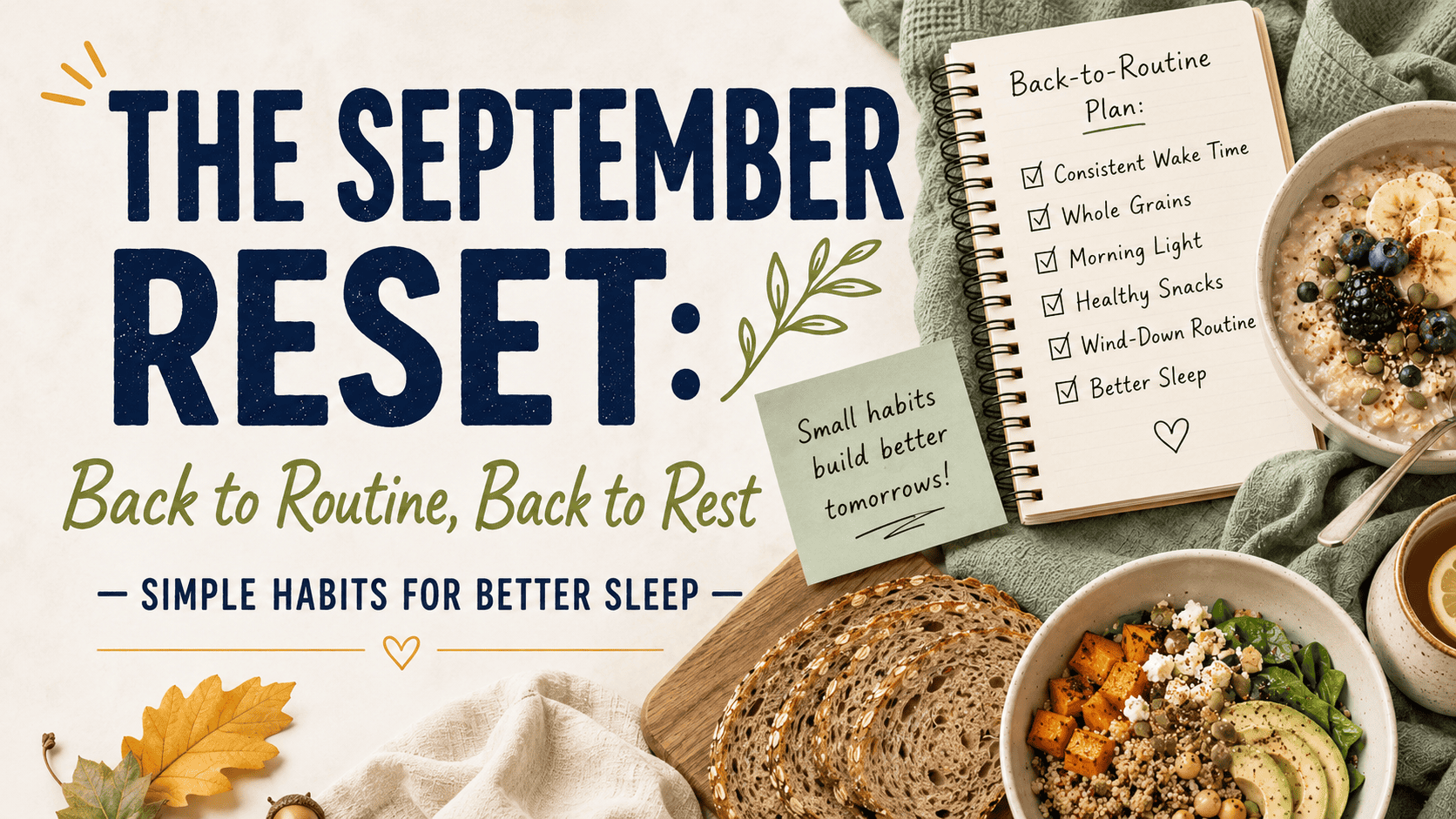
How Food, Daily Habits and a Little Consistency Can Help Us Sleep Better
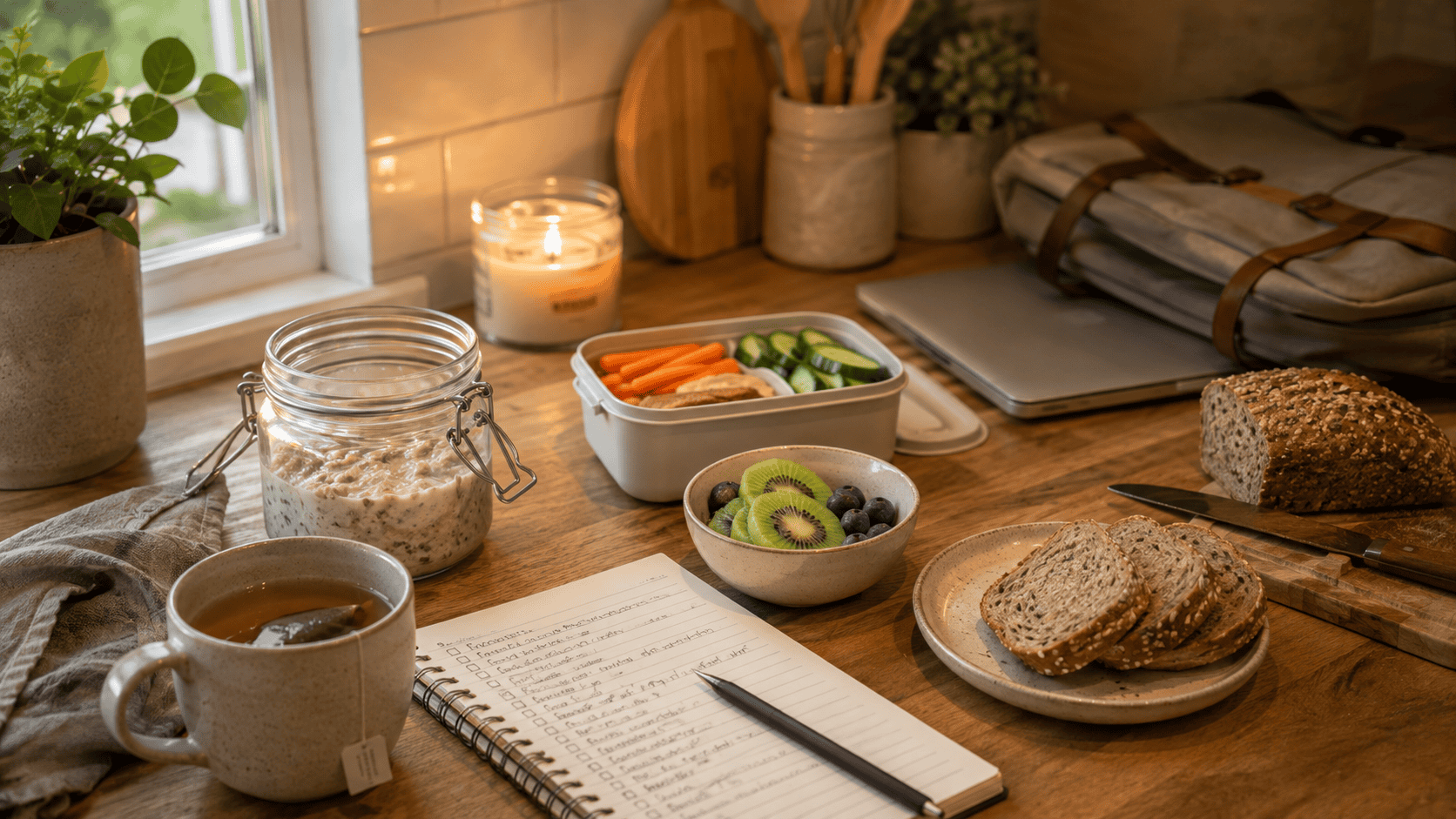
September has always felt like a reset month to me. The days start getting shorter, summer holidays wind down, kids head back to school, and suddenly calendars begin filling up again. Work, practices, lunches, meetings, homework, commuting and appointments all seem to return at once. I’m having low-key anxiety just remembering those busy days! My own September looks a little different these days. I now have one young working adult at home and another away at university, so the years of packed lunches, school drop-offs, after-school sports and carefully managed nighttime routines are behind me. I don’t miss every part of that hectic schedule, but I certainly remember it!
It also means I have a lot of sympathy for parents who are right in the peak of that busy season of life. September can feel like someone has flipped a switch. Suddenly everyone needs to be somewhere, meals need to happen around activities and work schedules, and evenings can become a race to get everything done before starting all over again the next morning.
Even without young children at home, though, I’ve realized that routine is important for all of us.
Summer tends to change our habits without us really noticing. We stay up later because the evenings are longer. Dinner gets pushed later. Weekends blend into weekdays, and many of us try to squeeze just a little more out of those warm summer nights. Then September arrives, the alarm clock goes off earlier (ugh), work and school schedules get more structured again, and we expect our bodies to fall back into line immediately. For a lot of us, it just doesn’t happen that quickly.
I actually enjoy getting back into a bit of a routine, but one of the hardest things to reset can be our sleep. Especially when you’re someone who struggles to get a good night’s sleep regardless.
What I like to remind people is that getting back into a healthier sleep routine doesn’t need to be complicated. In fact, some of the most helpful things are also the simplest: waking at a consistent time, eating regular meals, getting some morning light, moving our bodies during the day and paying a little more attention to what and when we eat and drink.
My son has indirectly reminded me of all of this. As a young 20-year-old interested in wellness (including supporting a healthy brain), he starts his day with a walk around the block, reads a chapter or two from a book, has his morning meal and supplements, and gets going with his workday. His consistency is impressive and something that I’ve always struggled with.
Whether you’re packing school lunches and driving to practices, heading back to university, returning to a busier work schedule or simply settling back into your own fall rhythm, our bodies tend to do well with consistency. Consistency can turn into HABIT.
And yes, the food we eat can play a role in how well we sleep too.
Sleep Is Part of Wellness, Not Time Away From It
When life gets busy, sleep can start to feel negotiable. One more email (I’m the worst for this). One more episode (yep, that too!). One more load of laundry. One more hour studying. But sleep isn’t simply the time when we stop being productive. It is an essential part of how the body restores itself and prepares for the following day.
Most adults need at least seven hours of sleep each night, and both quality and quantity matter. Quality is definitely where I have always struggled. Adequate sleep supports concentration, memory, mood, immune function, heart health and metabolism. When I’m on a winning streak of quality sleep, I feel like there’s nothing I can’t do that day.
That’s what makes September a particularly good time to think about sleep. Use it as an opportunity for another reset and a chance to establish new rules around sleep and routine.
Instead of waiting until we are exhausted in November or relying on caffeine to get through increasingly dark mornings, we can use the beginning of the school and work year to re-establish routines that help our bodies recognize when it is time to be awake and when it is time to rest.
Can What We Eat Really Affect How We Sleep?
Nutrition and sleep have an interesting relationship because they affect each other. What and when we eat may influence sleep quality, but poor sleep can also affect appetite, food choices and eating patterns the following day. That is why it helps to stop looking for a single magical “sleep food.”
There probably isn’t one.
Instead, research increasingly points toward the overall pattern of eating.
A recent systematic review looking at diet and sleep among university students found that healthier dietary patterns were generally associated with better sleep. Fruits, vegetables, dairy, and protein foods were among the foods linked to better sleep health in some studies, while skipping breakfast and eating late in the evening were associated with poorer sleep. Researchers also emphasized that more long-term research is needed before we can say that a particular food directly causes better sleep.
For me, this reinforces the importance of looking at our overall eating pattern rather than searching for a single “sleep food.” Whole grains certainly have a place in that pattern. At Rogers Foods, some of the ingredients we work with every day – oats, oat and wheat bran, flaxseed, barley, rye, spelt, millet and quinoa – are combined in blends such as our Healthy Grain and Ancient Grain Porridge Oats. These blends provide fibre and a variety of naturally occurring nutrients, making them an easy starting point for a more balanced breakfast.
It can be as simple as a warm bowl of oats with berries and nuts in the morning, particularly when everyone is trying to get back out the door on time. The oats themselves aren’t a magic solution for better sleep, but starting the day with a nourishing meal, eating regularly and getting back to predictable meal times are all part of rebuilding the daily rhythm that can get lost over the summer.
That distinction matters.
Healthy eating is not a treatment for insomnia, but our daily food habits can either work with our natural rhythms – or make those rhythms harder to maintain.
Start With a Better Day, Not Just a Better Bedtime
When someone is struggling to sleep, it is natural to focus entirely on what happens at 10 p.m. But preparing for tonight’s sleep actually begins this morning. Our bodies like patterns. Waking at approximately the same time each day, getting exposure to daylight and eating meals at reasonably predictable times provide ‘cues’ to our brains that help our internal clock organize the day.
After a summer of sleeping in, one of the simplest ways to reset your schedule is to start with your wake time. Try to get up at roughly the same time each day, even on weekends when possible. If your summer schedule has drifted significantly, gradually moving bedtime and wake time earlier can feel much easier than trying to suddenly shift everything by two hours on the night before school or work begins.
Morning light helps too. Open the blinds. Drink your coffee near a window. Take the dog outside. Walk the kids to school or take a short walk before beginning work.
Daylight tells the brain that the day has started.
Then, as evening approaches, lowering the lights and reducing stimulation helps send the opposite message.
Simple – but surprisingly powerful.
Don’t Forget Breakfast
The return of packed mornings can make breakfast one of the first casualties of September.
But a morning meal can be another useful cue that the day has begun, while also helping us avoid reaching mid-morning completely depleted.
Breakfast does not have to be complicated.
Try:
- Oatmeal topped with berries, nuts or seeds. I love grating an apple or chopping up a banana and cooking it into the oatmeal
- Whole grain toast with eggs
- Yogurt with fruit and oats – top with some granola
- Overnight oats* prepared the night before – try adding a scoop of protein powder
- A smoothie paired with whole-grain toast
- Nut butter and banana on toast (check out my version of ‘The Elvis’ in this newsletter, YUM!)
- Leftover whole-grain pancakes with fruit
Canada’s Food Guide recommends regularly choosing vegetables and fruits, whole-grain foods and protein foods as part of a healthy eating pattern. That combination works beautifully for breakfast too. Think oats and berries. Whole-grain toast and eggs. Yogurt, fruit and nuts. Nothing complicated. Just food that gives the body something substantial to work with as the day begins.
Watch the Afternoon Caffeine Creep
For many people, September means coffee. Perhaps a lot of coffee!
The first cup may be part of an enjoyable morning routine. The problem can be the second, third or late-afternoon cup we reach for because we didn’t sleep well the night before.
Caffeine can interfere with sleep, particularly when it is consumed later in the day. Health Canada recommends that adults consume no more than 400 mg of caffeine per day (four 8-ounce cups of brewed coffee), although individual sensitivity varies considerably.
And coffee isn’t the only source.
Tea, chocolate, cola, energy drinks and some supplemented foods may also contain caffeine.
If falling asleep has become difficult, experiment with moving your last caffeinated drink earlier in the day.
That 3:30 p.m. coffee may feel essential because you are tired, but if it contributes to another restless night, it can become part of a frustrating cycle:
Poor sleep → afternoon fatigue → more caffeine → difficulty sleeping → poor sleep.
Sometimes the first step toward sleeping better is simply interrupting that loop.
Give Dinner Some Breathing Room
September evenings can be chaotic.
Work runs late. Someone has practice. Someone else has homework. Dinner gets pushed to 8:30 or 9:00, and suddenly we are eating a large meal shortly before bed.
Occasional late dinners are simply part of life.
But when possible, giving the body some time between a large meal and bedtime may make sleep more comfortable. Sleep recommendations from both the CDC and the National Heart, Lung, and Blood Institute advise avoiding heavy or large meals close to bedtime.
That doesn’t mean going to bed hungry.
If dinner was early and you genuinely need something later, choose a simple snack rather than turning bedtime into another full meal.
You might try:
- A small bowl of oatmeal
- Yogurt and fruit
- Whole-grain toast with nut butter
- A banana and a handful of nuts
- An avocado with lemon juice
- Whole-grain crackers with cheese
- A small bowl of cereal with milk
The goal isn’t perfection. It is simply to make late-night eating lighter and more intentional.
FYI: Kiwi and Sleep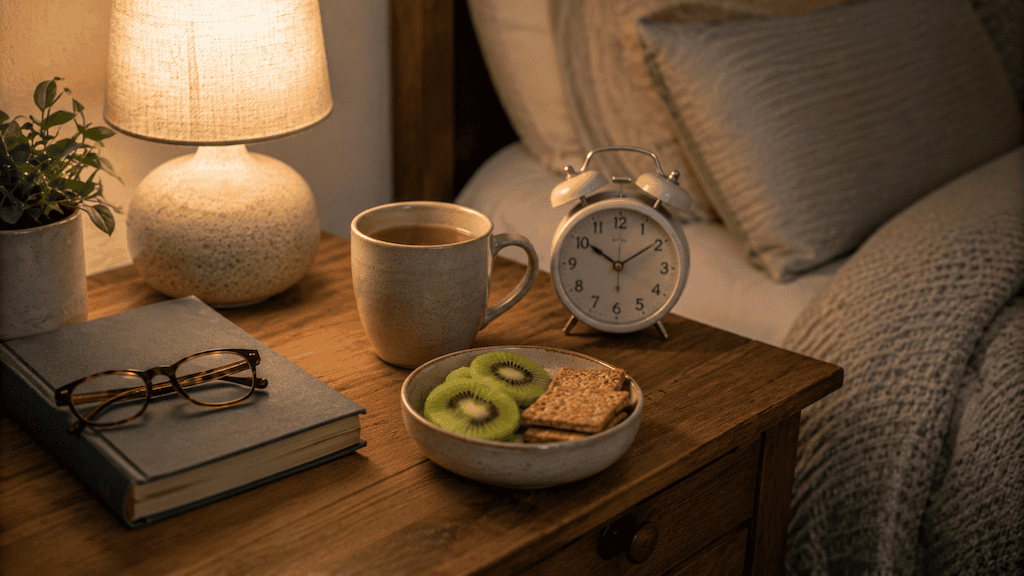
Kiwi may be a helpful evening snack for some people. Small studies have found that eating kiwifruit before bed may be associated with improvements in sleep onset, duration and efficiency, although the research is still limited. Kiwifruit also provides vitamin C, folate and potassium, making it a nutritious option when you’re looking for a light evening snack.
Build Dinner Around Balance
Busy-season dinners often fall into two categories: overly complicated meals we don’t have time to make or takeout because we couldn’t decide what to cook.
There is a much easier middle ground.
Use Canada’s Food Guide plate as a flexible starting point: plenty of vegetables and fruits, whole-grain foods, and protein foods.
A September dinner could be as simple as:
- Roasted vegetables + chicken + brown rice.
- A whole-grain pasta bowl with vegetables and lentils.
- Soup with hearty whole-grain bread.
- Salmon, broccoli and barley.
- A taco bowl with vegetables, black beans, whole grains and avocado.
- Rogers Foods Ancient Grain Blend Porridge Oats using vegetable or chicken stock instead of water for a whole-grain side dish option, served with a protein choice of meat, fish or plant-protein.
Healthy food does not have to become another item on the September performance checklist.
The meals we repeat because they are easy may actually be the ones that save us.
Be Careful With the “Nightcap”
Alcohol can sometimes make people feel sleepy initially, which is why it is easy to assume that a drink before bed helps with sleep.
But feeling sleepy and getting restorative sleep are not necessarily the same thing. Alcohol close to bedtime can contribute to lighter, more disrupted sleep and waking during the night. If sleep has been poor, reducing evening alcohol – or simply paying attention to whether you sleep differently on nights when you drink – can provide useful information.
Sometimes our own patterns tell us more than any wellness trend ever could.
Create a Landing Routine
Children have bedtime routines for a reason. So should you!
Bath. Pyjamas. Story. Lights out.
Somewhere along the way, adults often abandon the concept completely. We go straight from emails, news, television, and scrolling to turning off the light and expecting our brains to fall asleep instantly.
A short evening “landing routine” can help bridge a busy day and bedtime. It doesn’t need to involve expensive sleep products or a 12-step ritual.
Try choosing three or four simple signals:
- Dim the lights.
- Put your phone down.
- Prepare tomorrow’s breakfast or lunch.
- Have a shower or bath.
- Read a few pages of a book.
- Stretch.
- Write tomorrow’s priorities down so you don’t have to keep rehearsing them mentally.
- The CDC recommends turning off electronic devices at least 30 minutes before bedtime, while other sleep guidance also encourages using the hour before bed for quieter activities.
Think less about forcing yourself to sleep and more about creating conditions in which sleep is easier to find.
Make September Easier on Your Future Self
One of the reasons September feels exhausting is decision overload.
- What are we having for dinner?
- What am I packing for lunch?
- Where are the school forms?
- Who has practice tonight?
- Did anyone buy groceries?
The more we can decide ahead of time, the calmer our evenings become.
Spend 20 minutes on the weekend identifying a few breakfasts, lunches and dinners.
- Cook extra whole grains when you make them so you have some for tomorrow.
- Prepare overnight oats** or healthy granola.
- Wash fruit.
- Keep frozen vegetables available.
- Make a large soup.
- Bake a batch of whole-grain muffins
- Cook enough dinner to create tomorrow’s lunch.
These aren’t glamorous wellness habits. They are useful ones. And sometimes reducing evening chaos is exactly what creates the extra half-hour we need to wind down and get to bed.
What About Natural Sleep Supplements?
I’m often asked about sleep supplements, and two that come up frequently are magnesium and L-theanine.
Magnesium is an essential mineral involved in normal nerve and muscle function, and magnesium bisglycinate has become a popular evening supplement because it is generally considered one of the gentler forms on the digestive system. Some research suggests magnesium supplementation may help certain people with sleep, particularly those who are not getting enough magnesium to begin with, but the evidence is still mixed. I look at it as something that may support an evening routine rather than something that will simply “put you to sleep.”
If you are shopping for magnesium, look at the amount of elemental magnesium on the label rather than just the total weight of the magnesium compound. More is not necessarily better. Magnesium from food does not have the same upper limit, but the NIH sets an adult upper limit of 350 mg per day from supplements and medications unless a healthcare professional advises otherwise.
L-theanine is an amino acid naturally found in tea and is another supplement that has received attention for relaxation and sleep. A 2025 systematic review and meta-analysis found modest improvements in measures including subjective sleep quality and the amount of time people felt it took them to fall asleep, although researchers noted that more studies using L-theanine on its own are still needed.
Some people choose magnesium and L-theanine together in the evening, but I wouldn’t make supplements the first step in fixing a disrupted sleep schedule. Start with the basics we’ve already talked about: regular meals, less caffeine later in the day, morning light, movement, a consistent bedtime, and enough time actually set aside for sleep.
And remember, natural doesn’t automatically mean risk-free. Supplements can interact with medications and may not be appropriate for everyone. In Canada, look for a Natural Product Number (NPN) on the label, follow the product directions and speak with your healthcare provider or pharmacist if you take prescription medications, are pregnant or breastfeeding, have kidney disease, or are dealing with ongoing sleep problems.
Supplements can be one tool in the toolbox, but they work best alongside the everyday habits that tell our bodies it’s finally time to slow down.
Your September Sleep Reset
If summer has completely rearranged your routine, don’t try to fix everything tonight.
Start small.
- Choose a consistent wake time.
- Get outside in the morning.
- Eat regular, balanced meals.
- Move your caffeine earlier.
- Try to finish larger meals a little earlier in the evening.
- Create a 30-minute wind-down routine.
- Keep your bedroom cool, quiet and dark.
And perhaps most importantly, give yourself enough time to sleep. Our bodies do remarkably well with consistency. September will inevitably bring full calendars, early alarms and days when dinner doesn’t happen exactly as planned. Wellness isn’t about eliminating those days; it’s about having a rhythm we can return to. Because getting “back to the grind” shouldn’t mean grinding ourselves down.
This September, instead of only organizing the calendar, packing lunches, and setting alarms, consider resetting the routines that support everything else.
Eat well. Move during the day. Make room for rest. And when the day is finished, give yourself permission to let it be finished.
Tomorrow will come soon enough.
Easy Ways to Add More Whole Grains to Your Day with Rogers Foods!
Whole grains are an easy way to add more fibre, texture and nutrition to everyday meals. Because they contain all parts of the grain kernel, they naturally provide a range of nutrients and can help make meals feel more satisfying.
Rogers Foods offers several products that make it simple to enjoy more whole grains throughout the day:
- Ancient Grain Blend Porridge Oats – A hearty blend featuring whole grains such as oats, rye, barley, spelt, Kamut, millet and quinoa.
- Steel Cut Oat Blend Porridge Oats – A satisfying combination of whole-grain steel cut oats and large flake oats, along with bran and flaxseed.
- Healthy Grain Blend Porridge Oats – A wholesome breakfast blend made with oat flakes, wheat bran, oat bran and flaxseed.
- Whole Grain Whole Wheat Flour – Made using 100% of the wheat kernel, making it a great choice for breads, muffins, pancakes and everyday baking.
- 5 Grain Granola – Rogers Foods granolas combine whole grains including oats, wheat, triticale, barley and millet, with delicious additions such as almonds, cranberries, raspberries, hazelnuts and honey.

You don’t need to overhaul your diet to eat more whole grains. Start with something simple: swap your morning cereal for oatmeal, add granola to yogurt, bake with whole grain flour, or use oats in your favourite muffins and snack recipes.
Small changes can add up while still keeping the foods you enjoy familiar and delicious.
Overnight Oats – overnight oats made with Rogers Foods oats that have been cooked or toasted first.
A Note on Safety: Natural health products can still have side effects and interact with medications or medical conditions. Always follow the directions on the product label, look for a Health Canada Natural Product Number (NPN), and speak with your doctor, pharmacist or other qualified healthcare professional before starting a new supplement, especially if you are pregnant or breastfeeding, have kidney or liver concerns, take prescription medications, or have an ongoing sleep disorder. Supplements should support, not replace, healthy sleep habits or appropriate medical care.
References
- Centers for Disease Control and Prevention (CDC). About Sleep. Includes recommended sleep duration, the health benefits of sleep, consistent sleep schedules, limiting electronics before bed, and avoiding caffeine, alcohol and large meals later in the day.
CDC – About Sleep - National Heart, Lung, and Blood Institute (NHLBI), National Institutes of Health. Healthy Sleep Habits. Guidance on caffeine, alcohol, meal timing, daylight exposure, physical activity and maintaining a cool, dark and quiet sleep environment.
NHLBI – Healthy Sleep Habits - National Heart, Lung, and Blood Institute (NHLBI), National Institutes of Health. Sleep Disorder Treatments. Discusses regular meal schedules, avoiding late-night dinners, reducing caffeine and alcohol near bedtime, and establishing a relaxing wind-down routine.
NHLBI – Sleep Disorder Treatments - Health Canada. Caffeine in Foods. Health Canada recommends a maximum daily caffeine intake of 400 mg for adults aged 18 and older and notes that caffeine may contribute to insomnia in sensitive individuals.
Health Canada – Caffeine in Foods - Health Canada. Canada’s Food Guide. Recommends regularly eating vegetables and fruits, whole grain foods and protein foods as part of a healthy eating pattern.
Canada’s Food Guide - National Heart, Lung, and Blood Institute (NHLBI), National Institutes of Health. Get Enough Good-Quality Sleep. Reviews the relationship between adequate sleep and overall health and recommends regular sleep/wake times, daytime activity, avoiding heavy meals before bed and limiting caffeine and alcohol.
NHLBI – Get Enough Good-Quality Sleep - Diet and Sleep Among College Student Populations: A Systematic Review. Sleep Medicine Reviews, 2026. The review examined 57 studies from 44 countries and found that healthier dietary patterns were generally associated with better sleep health, while breakfast skipping and later meals were associated with poorer sleep outcomes. The authors caution that more longitudinal and controlled research is still needed to establish cause and effect.
PubMed – Diet and Sleep Systematic Review - NIH Office of Dietary Supplements, Magnesium Fact Sheet for Health Professionals; and Bulman A. et al., “The effects of L-theanine consumption on sleep outcomes: A systematic review and meta-analysis,” Sleep Medicine Reviews, 2025;81:102076.
- Diet and sleep among college student populations: a systematic review. PubMed- https://pubmed.ncbi.nlm.nih.gov/42217283/
Leave a Reply