

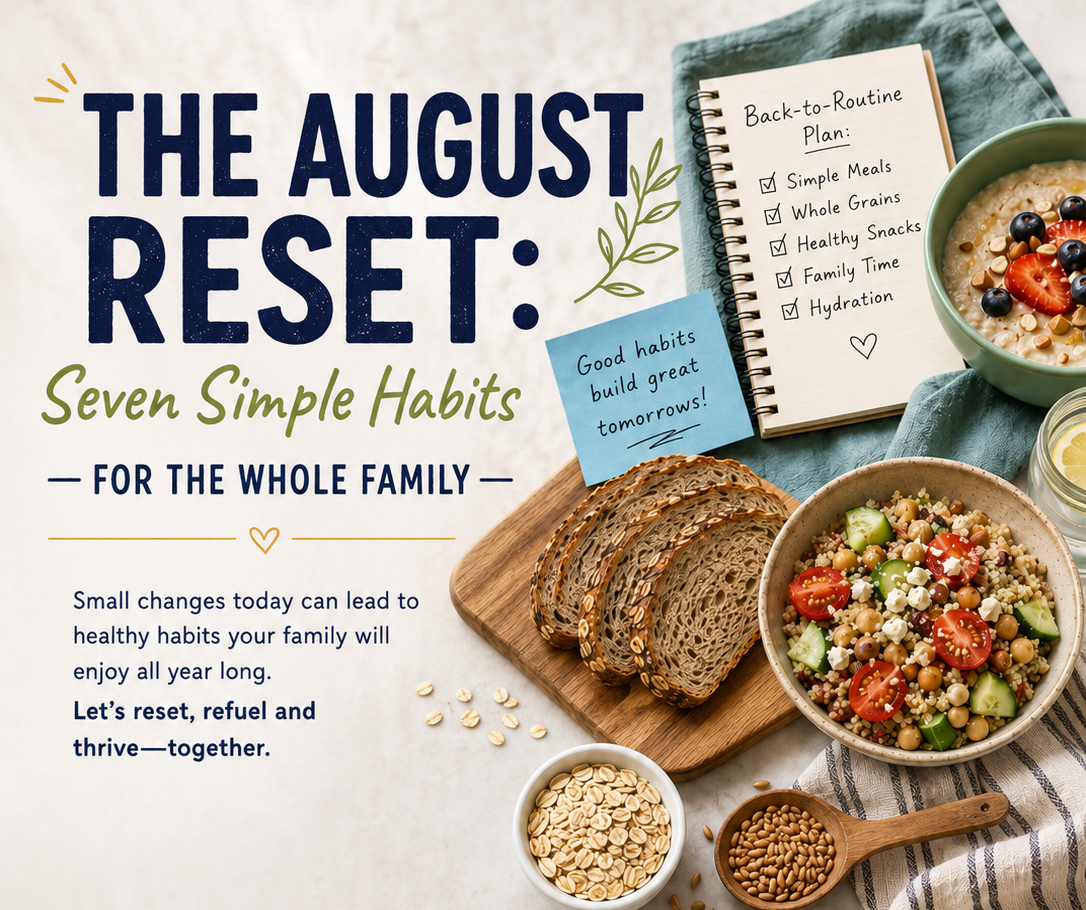
 August has a way of feeling like two seasons at once. There are still warm evenings, fresh berries, and a little summer freedom left to enjoy. At the same time, calendars start filling up, school supplies appear in stores, and many of us begin thinking about the routines that will carry us into fall.
That makes August an ideal time for a gentle reset – not a strict diet, a complicated meal plan or an overnight transformation. Instead, it is an opportunity to make practical changes that can make busy mornings, packed lunches and weeknight meals easier.
One of the simplest places to start is with whole grains. Oats, whole-grain breads, brown rice, barley, quinoa and other whole grains can add flavour, texture and valuable nutrients to everyday meals. They are also easy to prepare ahead of time and flexible enough for breakfast, lunch, snacks and dinner.
Here is how to use the last weeks of summer to build realistic whole-grain habits for the season ahead.
Habit 1: Use August as Your Practice Month
September often arrives in a rush. School starts, work schedules fill up, extracurricular activities resume, and relaxed summer meals give way to packed breakfasts and quick dinners. Waiting until the busiest week to establish a new routine can make healthy eating feel harder than it needs to be.
August gives you a head start.
Use this month to notice where your routine tends to break down. Do mornings become rushed? Are lunches thrown together at the last minute? Does everyone arrive home hungry with no dinner plan? Once you identify the difficult moments, you can prepare a few reliable solutions.
A useful reset might include choosing two breakfasts to rotate, baking and freezing muffins, organizing one shelf for lunch-making supplies, or adding a recurring meal-planning time to your weekend. The goal is not to plan every bite. It is to reduce the number of decisions you have to make when time and energy are limited.
Once you identify these pressure points, choose one or two simple solutions. You might:
- Select two breakfasts to rotate during the week.
- Bake and freeze a batch of muffins.
- Create a designated shelf for lunch-making ingredients.
- Wash and portion fruit and vegetables in advance.
- Cook an extra grain or protein food at dinner.
- Set aside 15 minutes each weekend to plan several meals.
Menu planning can support healthier meals while saving time and helping households use the food already in the refrigerator, freezer and pantry. Dietitians of Canada recommends keeping weekday meals simple, planning meals and snacks, using leftovers for lunches and preparing freezer meals for especially busy days.
The goal is not to plan every bite your family will eat. The goal is to create a few dependable options that reduce stress when time and energy are limited.
Habit 2: Learn What “Whole Grain” Really Means
A grain kernel has three main parts: the bran, the germ and the endosperm.
Understanding what makes a grain whole can simplify grocery shopping.
A grain kernel has three main parts:
- The bran: The fibre-rich outer layer.
- The germ: The germ contains nutrients and healthy fats that support the growth of a new plant.
- The endosperm: The endosperm is the largest part and contains mostly starch (carbohydrates), along with some protein, vitamins and minerals.
Whole grain foods contain all three parts of the kernel. Refined grains have had some of the bran and germ removed during processing, which also removes some of the grain’s naturally occurring fibre and nutrients. Canada’s Food Guide notes that whole grain foods generally contain more fibre than refined grain foods and provide important nutrients, including vitamins and minerals.
Common whole grains include:
- Whole oats and oatmeal
- Barley
- Brown and wild rice
- Quinoa
- Bulgur
- Buckwheat
- Whole grain wheat
- Whole grain rye
- Whole grain corn
It is important to read food labels rather than judging a product by its colour or name. A darker bread is not necessarily whole grain, and the term “multigrain” only means the product contains more than one type of grain. Those grains may or may not be whole.
Look for the words “whole grain” followed by the name of the grain near the beginning of the ingredient list. Examples include whole grain oats or whole grain wheat.
In Canada, a product labelled “100% whole wheat” is not necessarily whole grain because a small portion of the wheat kernel may be removed during milling. Whole wheat foods can still be nutritious sources of fibre, but they are not always the same as whole grain foods (Health Canada, 2019, 2026a).
Use the Nutrition Facts table to compare similar products. Check the grams of fibre per serving and the percentage daily value. You can also compare added sugars, sodium and saturated fat, especially when choosing cereals, granola products, crackers and packaged baked goods.
This does not mean every grain food your family eats must be whole grain. Think of whole grains as an option to choose more often—not another food rule that must be followed to the letter.
Habit 3: Add Fibre Gradually to Support Digestion & Lasting Satisfaction
Fibre is the part of plant foods that the body does not fully digest. It is found in whole grains, vegetables, fruit, beans, peas, lentils, nuts and seeds.
There are two main types of fibre, and many plant foods contain both types.
Insoluble fibre adds bulk and supports regular bowel movements. Whole grains, wheat bran, corn bran, and the skins of many fruits and vegetables are good sources.
Soluble fibre absorbs water during digestion. It is found in foods such as oats, barley, beans, lentils, and some fruits and vegetables. Soluble fibre can help lower blood cholesterol, support blood sugar control, and help you feel satisfied longer (HealthLink BC, 2025).
If your family does not currently eat many high-fibre foods, introduce them gradually. Suddenly adding large amounts of bran, beans or whole grains may cause temporary gas, cramping or bloating.
Try adding one higher-fibre food at a time. You might start with oatmeal at breakfast, add fruit to snacks, or replace part of the flour in a familiar recipe.
Drinking enough water is also important when increasing fibre intake. HealthLink BC recommends adding fibre gradually and drinking plenty of fluids to support comfortable digestion (HealthLink BC, 2025).
Fibre needs vary by age, life stage and individual health requirements. Anyone advised to follow a low-fibre diet, or with a digestive or medical condition, should consult a health-care provider or registered dietitian before making significant dietary changes.
Habit 4: Build a Better Breakfast
A balanced breakfast does not need to be elaborate. A helpful starting point is to include three elements:
1. A whole grain food
2. A vegetable or fruit
3. A protein food
Canada’s Food Guide plate recommends that half of a meal be vegetables and fruits, one-quarter whole grain foods and one-quarter protein foods. These proportions can also serve as a flexible guide for breakfasts, bowls, lunch boxes and mixed dishes.
Try these combinations:
- Oatmeal topped with berries, chopped nuts and yogurt
- Whole grain toast with egg and sliced tomato, plus fruit
- A bran muffin with cottage cheese and an apple
- Overnight oats with milk or fortified soy beverage, chia seeds and peaches
- Whole grain cereal with milk and berries
- A whole grain breakfast wrap filled with egg and vegetables
- A smoothie served with whole grain toast and nut butter
On rushed mornings, breakfast can be split into two parts. Eat toast with nut butter before leaving home, and take fruit or yogurt for later. This may be more realistic than expecting everyone to sit down for a full meal.
You can also set up a breakfast station with oats, cereal, dried fruit, seeds, and nut or seed butter in one area. Keep washed fruit, yogurt, and prepared overnight oats together in the refrigerator. Making the easiest choice visible can save valuable time.
Habit 5: Make Easy Whole-Grain Upgrades
Breakfast is one of the easiest meals to prepare with whole grains.
You do not need to replace every familiar food or learn a new style of cooking. Begin with meals and recipes your household already enjoys.
1. Add oats or bran to muffins and pancakes
Muffins and pancakes are easy ways to introduce more whole-grain ingredients. Stir oats, oat bran, or wheat bran into a favourite recipe, or replace part of the all-purpose flour with whole wheat or whole-grain flour.
Begin by replacing about one-quarter of the flour. This preserves the familiar texture while adding a slightly nutty flavour. As your household becomes accustomed to the change, you can experiment with a larger proportion.
Batch-bake muffins and freeze them individually. Move the number you need to the refrigerator the night before, then pair one with fruit and a protein for a quick breakfast or snack.
 2. Give oatmeal more variety
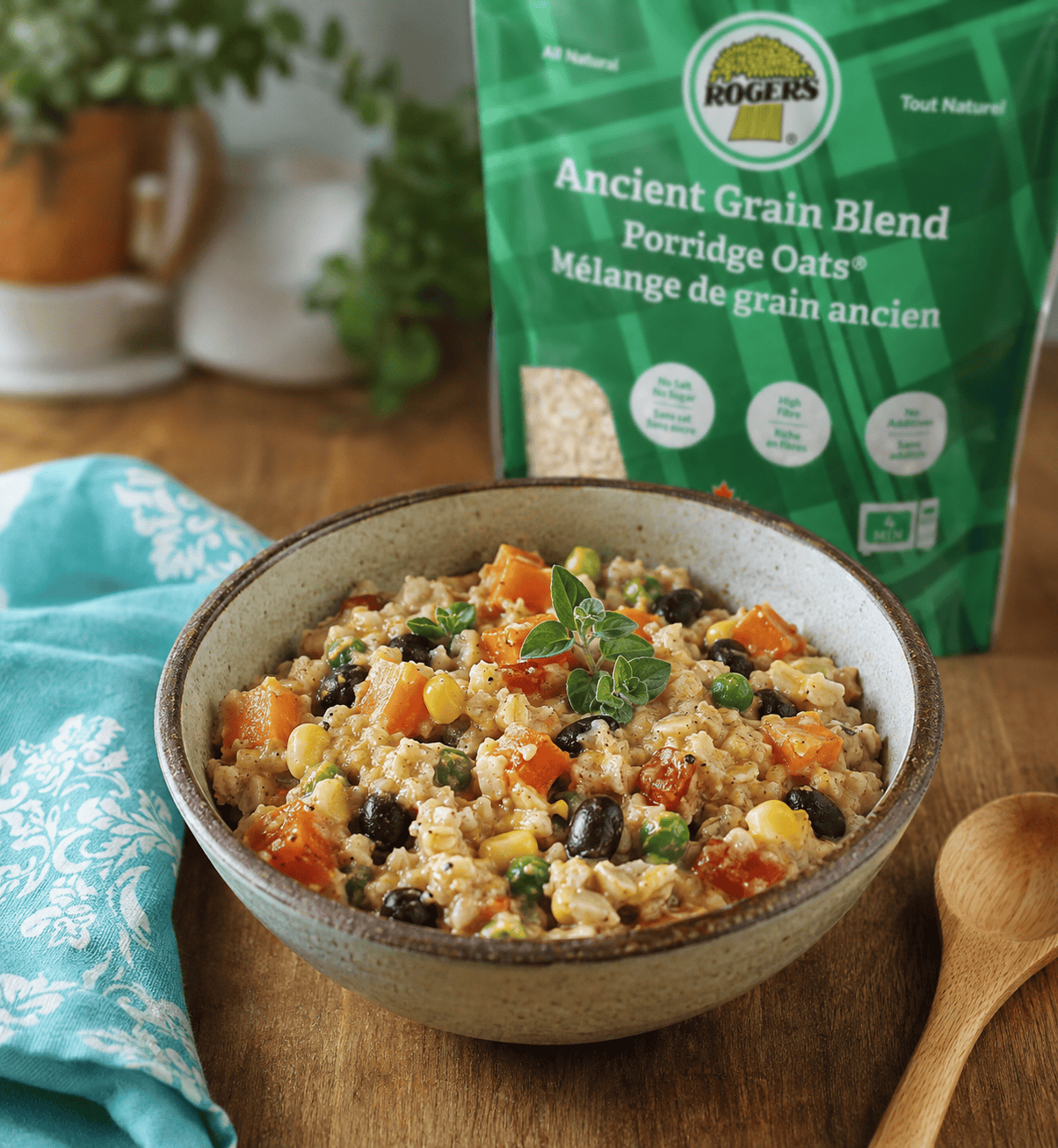
Oatmeal does not have to taste the same every morning. Create a simple base and change the toppings:
- Berries, yogurt and pumpkin seeds
- Apple, cinnamon and walnuts
- Banana and natural peanut butter
- Peaches and unsweetened coconut
- Grated carrot, raisins and warm spices
Overnight oats can be assembled in jars for several mornings at once. Be sure to toast or roast oats before consuming – oats should not be eaten raw.
Baked oatmeal can also be sliced into portions and reheated throughout the week.
3. Mix whole grains into familiar side dishes
A full switch can be difficult for selective eaters. Try blending grains instead. Combine brown rice with white rice, add barley to soup, or mix quinoa into a grain salad.
Canada’s Food Guide suggests adding grains such as barley, bulgur or quinoa to soups, salads and stir-fries, or combining brown or wild rice with white rice for extra texture and fibre.
Over time, you can gradually increase the proportion of whole grains as everyone becomes familiar with the flavour and texture.
4. Build better grab-and-go snacks
Keep simple whole-grain snack components together so they are easy to see and pack. Options might include whole-grain crackers, homemade oat bars, air-popped popcorn, whole-grain cereal, or a small portion of granola.
Pair the grain with another food, such as:
- Whole grain crackers and cheese
- Granola and plain yogurt
- Popcorn and a handful of nuts
- An oat muffin and fruit
- Whole grain toast with nut or seed butter
Combining foods adds variety and can make a snack feel more complete.
5. Make gradual changes in baking
Home baking gives you control over the ingredients, but a higher-fibre recipe still needs to taste good. Start by adding a small amount of bran or by substituting part of the flour, rather than changing everything at once.
Whole-grain flour and bran absorb liquid differently from all-purpose flour. A batter may need a little more milk, water, or resting time. Let pancake, muffin, or quick-bread batter rest for five to ten minutes before deciding whether it is too thick. This gives the grains time to hydrate.
Rogers Foods pantry staples—including oats, bran and baking flours—can be used in many familiar recipes, making it easier to experiment without completely replacing the foods your family already loves.
Habit 6: Prepare Once, Use More than Once
Meal preparation does not have to take an entire Sunday afternoon. Focus on preparing ingredients that can be used in more than one way.
Cook one grain.
Make a pot of brown rice, quinoa, or barley. Use it in grain bowls the first night, add it to soup or salad the next day, and freeze extra portions for another week.
Bake one item.
Prepare muffins, oat bars, or a loaf of whole-grain bread. Freeze part of the batch before it disappears.
Wash and portion produce.
Berries, grapes, sliced vegetables and whole fruit are easier to pack when they are ready to go.
Prepare one protein.
Cook eggs, roast chickpeas, portion yogurt, prepare hummus or cook chicken, tofu or lentils for lunches and dinners.
Use a repeatable lunch formula.
Instead of inventing a different lunch every day, use a repeatable formula:
- Whole grain base: Bread, wrap, crackers, grain salad, cereal or muffin
- Protein food: Beans, lentils, egg, fish, chicken, tofu, yogurt or cheese
- Vegetable or fruit: Fresh, frozen, canned or dried
- Drink: Water as the regular main choice
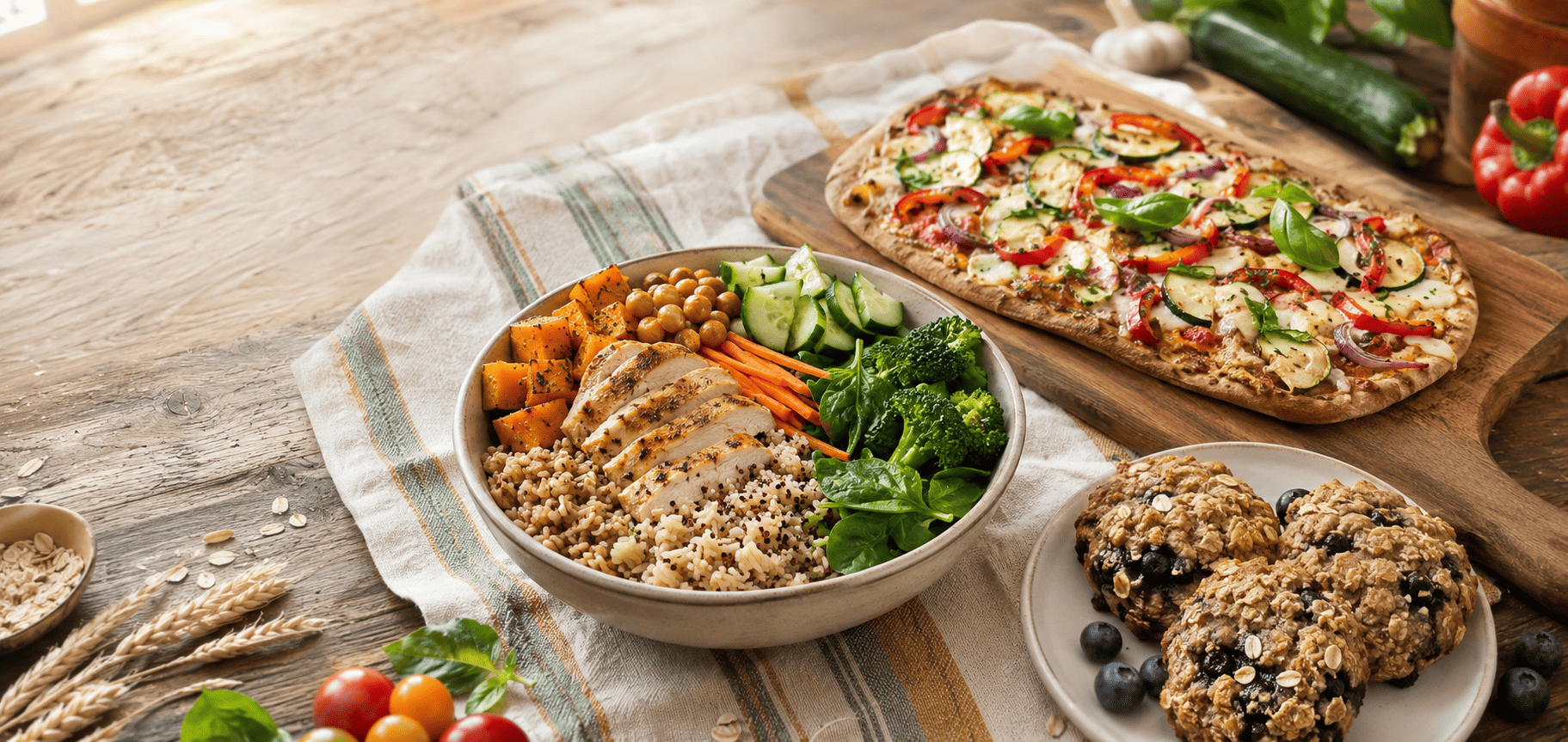
A grain bowl is one of the easiest ways to use leftovers. Begin with brown rice, barley or quinoa, then add vegetables, a protein and a simple dressing.
For younger children or family members who prefer foods served separately, pack the ingredients in individual sections rather than mixing everything together.
It is also helpful to keep one emergency meal on hand for evenings when the plan falls apart. Soup from the freezer, eggs with whole-grain toast, oatmeal with fruit, or a quick pasta dish can prevent a busy evening from becoming unnecessarily stressful.
Habit 7: Try the Seven-Day Family Challenge
A short challenge can help your family experiment without making a long-term commitment. At the end of the week, choose the habits that worked best and continue with only those.
Day 1: Read a label
Choose one bread, cereal or cracker and look for “whole grain” in the ingredient list. Compare its fibre value with another option.
Day 2: Upgrade breakfast
Choose oatmeal, whole grain toast or whole grain cereal. Add fruit and a protein food.
Day 3: Bake and freeze
Make muffins, pancakes, waffles or oat bars. Freeze enough for at least one future breakfast.
Day 4: Add a grain to lunch
Try a sandwich on whole grain bread, a barley salad, brown rice bowl or whole grain crackers with soup.
Day 5: Mix, do not replace
Combine a whole grain with a familiar refined grain. Try half brown and half white rice, or mix whole grain and regular pasta.
Day 6: Prepare tomorrow’s breakfast tonight
Make overnight oats, portion cereal and toppings or place frozen muffins in the refrigerator to thaw.
Day 7: Choose one habit to repeat
Ask each family member which meal or habit they enjoyed most. Select one or two ideas to add to next week’s routine.
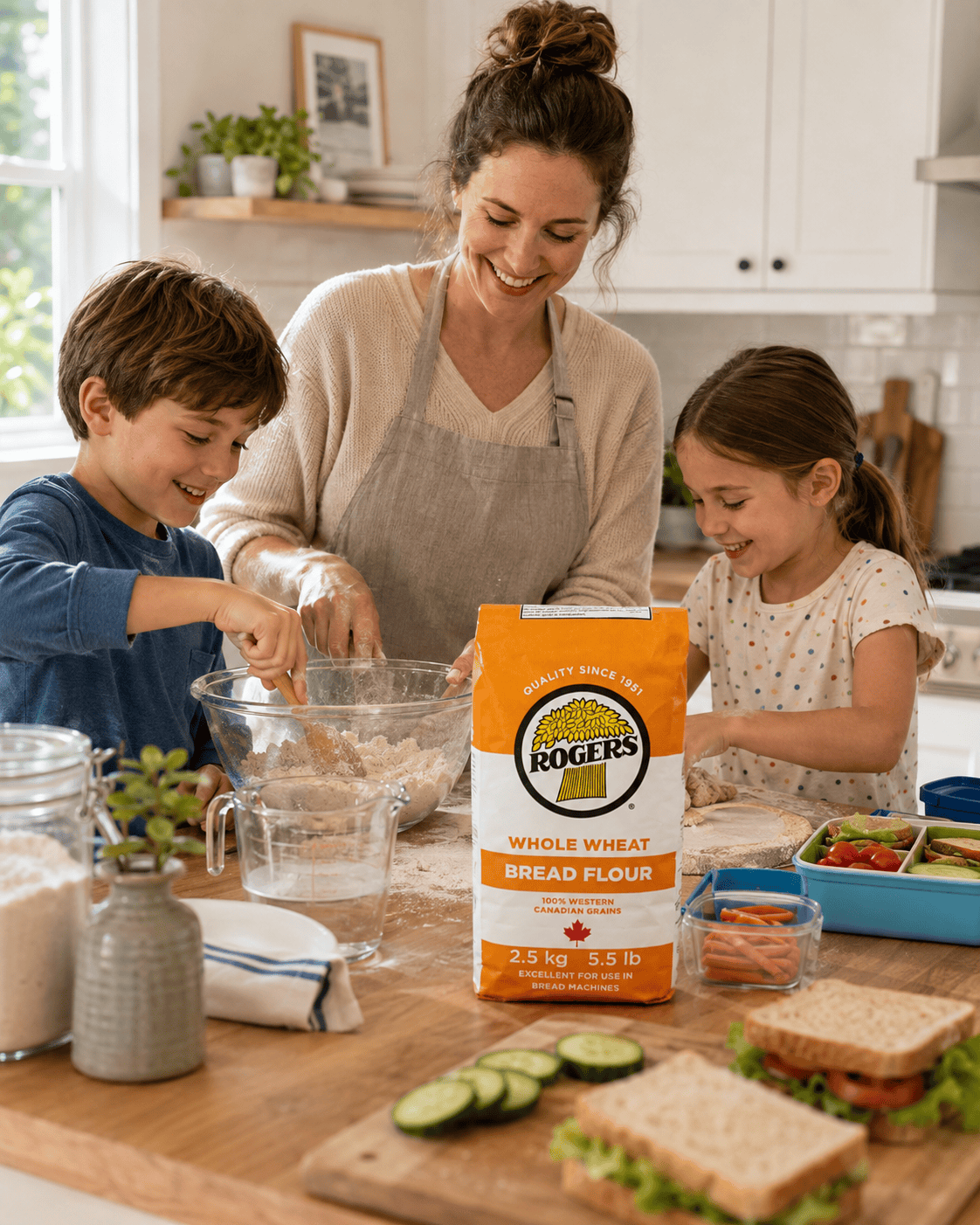
Children can help select toppings, stir muffin batter, measure oats, wash fruit, or pack their own snack containers. Involving family members in age-appropriate food preparation can make the routine feel like a shared household project rather than a single person’s responsibility.
A Reset That Can Last Beyond August
The most useful wellness habits are not the ones that demand perfection. They are the ones that fit into real mornings, budgets and family schedules.
Your family’s whole-grain reset might begin with oatmeal twice a week, a batch of muffins for the freezer, or a loaf of whole-grain bread added to the shopping list. These changes may seem small, but repeated choices can gradually become dependable routines.
Use August to experiment. Test a few breakfasts, organize part of the pantry, prepare one freezer-friendly recipe, and invite everyone in the household to choose a meal or snack they would enjoy.
Some ideas will work well, while others may not suit your family. Keep what makes life easier and let go of what does not.
By the time September arrives, you will not be starting from scratch. You will already have several simple habits ready to carry into the new season.
At Rogers Foods, we believe wholesome food can be both nourishing and enjoyable. With a few reliable ingredients and a little preparation, whole grains can be a simple, delicious part of family life—not only during the back-to-school season but throughout the year.
This article is intended for general educational purposes and is not a substitute for individualized medical or nutritional advice. Consult a qualified health-care provider or registered dietitian regarding your individual needs.
References
Dietitians of Canada. (n.d.). 7 steps for quick and easy menu planning [PDF]. https://www.dietitians.ca/getattachment/Advocacy/Toolkits-and-Resources/Resources-A-G/7-Steps-for-Quick-and-Easy-Menu-Planning/7-Steps-for-Quick-and-Easy-Menu-Planning.pdf.aspx?ext=.pdf&lang=en-CA
Health Canada. (2019, September 5). Whole grains—Get the facts. Government of Canada. https://www.canada.ca/en/health-canada/services/canada-food-guide/resources/healthy-eating-recommendations/eat-a-variety/whole-grain/get-facts.html
Health Canada. (2026a, May 4). Eat whole grain foods. Government of Canada. https://www.canada.ca/en/health-canada/services/food-guide/explore/healthy-eating-recommendations/eat-variety/eat-whole-grains.html
Health Canada. (2026b, May 20). Make healthy meals with Canada’s food guide plate. Government of Canada. https://www.canada.ca/en/health-canada/services/food-guide/eating-support/cooking/make-healthy-meals-plate.html
HealthLink BC. (2025, March). Fibre and your health (HealthLinkBC File No. 68h) [PDF]. Government of British Columbia. https://www.healthlinkbc.ca/sites/default/files/documents/hfile68h.pdf
Leave a Reply