


How Fibre, Whole Grains and Simple Seasonal Foods Can Help Us Feel Satisfied, Energized and Well

There is something about October that changes the way I want to eat. The mornings are darker and cooler. Sweaters come back out. Soup suddenly sounds better than salad, oatmeal replaces some of the lighter summer breakfasts, and the oven starts getting a lot more use in my house.
I love that transition.
September always feels like the month when we get ourselves organized again. We return to work, school and regular schedules. By October, most of us have settled back into those routines, but we are also heading into what I think of as the beginning of Canada’s true comfort-food season.
Thanksgiving arrives. Apples, pears, pumpkins, squash and root vegetables are everywhere. We start baking again. Slow cookers come out of cupboards, and warm breakfasts become much more appealing than they were in July.
As a Registered Holistic Nutritionist, I don’t think there is anything wrong with wanting comfort from our food. Food should be enjoyable. It is part of family traditions, celebrations and some of the best moments we share around a table. What interests me is how we can make those comforting fall foods work a little harder for us nutritionally.
Working with Rogers Foods, I am constantly reminded that some of the simplest ingredients in our cupboards, including oats, bran, whole grains and flour, can form the foundation of incredibly satisfying meals. This October, instead of talking about restriction, diets or what we should stop eating, I want to focus on something we can add to our plates:
More fibre. More whole grains. More variety.
Sometimes wellness really can be that simple.
Fibre Isn’t Trendy, But It Should Be
Protein gets an enormous amount of attention in nutrition conversations. And yes, protein is important. But if there is one nutrient I wish more people paid attention to, it’s fibre.
Health Canada describes fibre as a non-digestible carbohydrate found in plant foods. It plays several important roles in the body, including supporting bowel regularity, helping lower blood cholesterol and helping us feel full longer. Fibre is naturally found in foods such as fruits, vegetables, beans, lentils, nuts, seeds and whole grains.
Here’s the number that always gets my attention: Health Canada says women generally need about 25 grams of fibre per day and men about 38 grams, yet most Canadians are getting only about half that amount.
That’s a significant gap.
I don’t think the solution is to suddenly start counting every gram of fibre we eat. For most people, that would turn another perfectly normal part of life into a math exercise. Instead, I prefer to look at what is actually on the plate.
Did breakfast contain a whole grain?
Was there a fruit or vegetable?
Could we add beans or lentils to that soup?
Could we use whole-grain flour in some of our baking?
Could we sprinkle some bran into a recipe we already make?
Small changes repeated regularly are often much more realistic than completely reinventing the way we eat.
Soluble and Insoluble Fibre: We Benefit From Both
Not all fibre behaves exactly the same way in our bodies.
Soluble fibre absorbs water and forms a gel-like substance during digestion. Oats, oat bran, barley, beans and certain fruits contain soluble fibre.
Insoluble fibre adds bulk and helps food move through the digestive tract. Wheat bran, whole grains, vegetables and many other plant foods provide insoluble fibre.
Rather than worrying about choosing one type over another, I like to encourage variety. This is one reason I appreciate grain combinations.
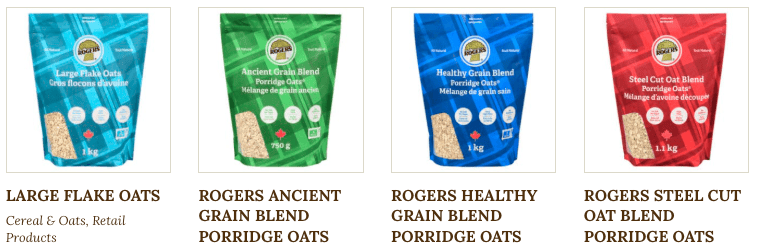
Rogers Foods Healthy Grain Blend Porridge Oats, for example, combines oat flakes, wheat bran, oat bran and flaxseed. This provides a blend of ingredients rather than relying on a single grain. From a practical perspective, it also means one warm bowl at breakfast can include oats and two different forms of bran without us having to think very hard about it.
That’s my kind of nutrition.
The same philosophy applies throughout the day. Add vegetables to lunch, fruit to a snack, beans to a soup, seeds to breakfast and whole grains to dinner.
The goal isn’t to find the one perfect fibre source. It’s variety.
Oats Deserve Their Place at the Fall Table
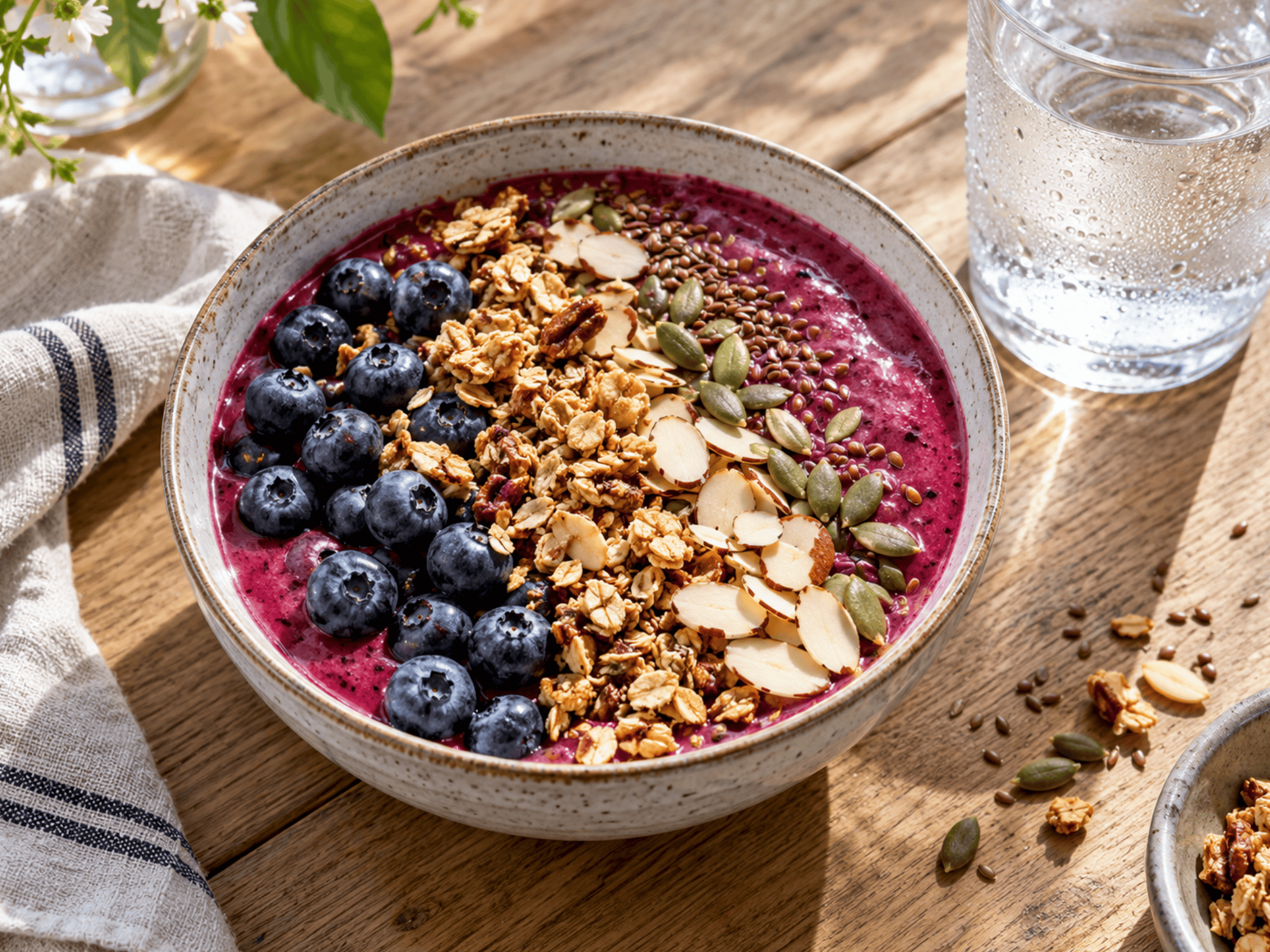
October and oatmeal just seem to belong together. Few breakfasts are easier than putting a pot of oats on the stove on a cold morning and adding whatever happens to be in the kitchen, such as apples and cinnamon, berries, banana, dried fruit, walnuts, pumpkin seeds, or a spoonful of nut butter.
But oats bring more to the table than comfort.
Oats and oat bran contain a soluble fibre called beta-glucan. Health Canada reviewed the evidence on oat beta-glucan and concluded that there is scientific support for its role in lowering blood cholesterol when appropriate amounts are consumed as part of qualifying foods. Health Canada’s assessment uses 3 grams of beta-glucan oat fibre per day as the basis for its authorized cholesterol-lowering claim.
That doesn’t mean one bowl of oatmeal is medicine, and I don’t think we should approach food that way.
I look at it as another example of why the foods we eat regularly matter.
A bowl of oats once won’t determine our health. But choosing whole grains, fruits, vegetables, legumes, nuts and seeds repeatedly over months and years creates a very different overall dietary pattern.
That’s where nutrition becomes powerful.
Let’s Talk About Carbohydrates
Carbohydrates have taken a bit of a beating in wellness culture. Bread is bad. Pasta is bad. Grains are bad. Carbs make you tired. Carbs make you gain weight.
Nutrition is rarely that simple.
Carbohydrates are one of our body’s primary energy sources, and carbohydrate-containing foods can also provide fibre, vitamins, minerals and other nutrients. The type of carbohydrate and the rest of the meal matter.
Diabetes Canada recommends choosing higher-fibre carbohydrate foods such as whole grains, beans, peas, lentils, vegetables and fruits. It also notes that foods higher in fibre can help people feel full longer and reduce the impact of carbohydrates on blood sugar.
So instead of asking, “How do I eliminate carbohydrates?” I think a much more useful question is:
“What kind of carbohydrate am I choosing, and what am I eating with it?”
Consider a bowl of oatmeal. Add berries, walnuts and Greek yogurt, and suddenly you have carbohydrates, fibre, protein and fat together.
Take a slice of whole-grain toast. Top it with egg and avocado, and again we have a much more balanced meal.
Have a bowl of hearty vegetable soup. Add barley, beans, or a slice of whole-grain bread, and you have transformed something relatively light into a much more satisfying lunch.
Balance is far more useful than fear.
What Does “Whole Grain” Actually Mean?
This is an area where food labels can be confusing. A whole grain contains all three major parts of the grain kernel: the bran, germ and endosperm.
When grains are refined, manufacturers remove parts of the kernel. This changes both the food’s texture and nutritional composition.
Health Canada notes that whole grain foods typically contain more fibre than refined grains and recommends regularly choosing foods such as whole oats or oatmeal, quinoa, brown or wild rice, whole grain pasta, and whole grain bread. Higher-fibre eating patterns are associated with a lower risk of several chronic diseases, including heart disease, type 2 diabetes, stroke, and colon cancer.
There is also an interesting Canadian labelling distinction that many people don’t realize. In Canada, whole wheat flour and whole grain whole wheat flour are not necessarily the same thing.
Health Canada explains that during the production of conventional whole wheat flour, up to 5 percent of the wheat kernel may be removed. A true whole grain product contains the bran, germ and endosperm in their original proportions.
Rogers Foods Whole Grain Whole Wheat Flour is made using the whole wheat kernel, which makes it an easy ingredient to reach for when I want to bring more whole grain into fall baking.
That doesn’t mean every muffin, loaf, or pancake has to be 100 percent whole grain. Sometimes replacing a portion of regular flour with whole grain flour is a perfectly good place to start.
Again, I’m a big believer in progress over perfection.
Ancient Grains: Sometimes Variety Is the Benefit
“Ancient grains” may sound like another nutrition buzzword, but what I like most about them is actually very straightforward: They give us variety.
Rogers Foods Ancient Grain Blend Porridge Oats contains large flake oats, rye flakes, barley flakes, spelt flakes, kamut flakes, oat bran, millet, flaxseed and quinoa flakes. It contains no added sugar or salt and provides 18% of the Daily Value for fibre per serving.
That’s nine different grain and seed ingredients in one blend. From my perspective, that’s the real appeal. I’m not a breakfast person, but now I make myself an oatmeal bowl of this blend at mid-morning, and my body has thanked me for it. I’ve experienced improved digestion and more daily energy, and I’ve actually lost weight, more than likely because I’m fuller longer and eat less at dinner time.
We can get comfortable eating the same three or four foods every day. Changing the grains we eat introduces different textures, flavours and nutrient profiles.
One morning might be traditional large-flake oats. Another could be a multi-grain porridge. Barley can go into soup. Quinoa can go into a salad. Whole-grain flour can go into muffins or bread.
Nutrition becomes much easier when we stop thinking of healthy eating as a narrow list of “approved” foods and start thinking about diversity.
Fibre and Our Gut
We can’t have a modern conversation about fibre without mentioning the gut microbiome. This is a topic I’ve taken great interest in over the years and have studied in depth. Our digestive tract is home to an enormous community of microorganisms, and researchers continue to learn how diet influences that ecosystem.
Certain dietary fibres can be fermented by bacteria in the intestine. These interactions can produce compounds such as short-chain fatty acids and influence microbial metabolism. Importantly, research also shows that people respond differently to individual fibres, so this isn’t another area where one ingredient can be declared “the best.”
This is why I continue coming back to variety.
- Oats.
- Barley.
- Wheat bran.
- Oat bran.
- Beans.
- Lentils.
- Vegetables.
- Fruit.
- Nuts.
- Seeds.
Rather than chasing a supplement or the latest gut-health superfood, we can start by eating a wider variety of plant foods. There’s nothing particularly glamorous about that advice, but good nutrition rarely needs to be.
Wheat Bran: One of the Simplest Additions
Wheat bran might be one of the most overlooked ingredients in the baking aisle.
Rogers Foods Wheat Bran comes from the outer portion of the wheat kernel and is naturally a source of dietary fibre, along with B vitamins and minerals. I like it because it is so easy to use.
You don’t necessarily need an entirely new recipe. A little wheat bran can be added to muffins, pancakes, breads and cooked cereals. It can be part of an apple muffin, pumpkin loaf or hearty breakfast recipe, which fits perfectly with the foods many of us are already making in October.
One important note from a food-safety perspective: raw grain products, including bran, oats and flour, should be cooked, baked or toasted before eating rather than added raw to foods. Rogers provides preparation and safe-handling instructions for these products, and those directions should always be followed.
The Fall Comfort-Food Formula I Use
When I’m putting together a fall meal, I don’t want to calculate nutrients. I use a much simpler approach. I start with something colourful, add a protein, include a higher-fibre carbohydrate or whole grain, and then add flavour and healthy fats.
That creates endless possibilities.
For October, that might look like:
- Butternut squash soup with lentils and whole-grain bread.
- Oatmeal with apples, cinnamon, walnuts and Greek yogurt.
- Turkey and vegetable soup with barley.
- Chilli with beans, vegetables, and a whole-grain roll.
- Roasted squash with quinoa, cranberries, pumpkin seeds and chicken.
- Whole grain pancakes topped with berries and yogurt.
- Apple muffins made with whole grain flour and wheat or oat bran.
- A harvest bowl with roasted root vegetables, chickpeas and a grain such as barley or quinoa.
Notice that none of those meals sound particularly “healthy.” They just sound like food. That’s intentional. I don’t believe wellness has to look like a plate of raw vegetables beside a protein shake. A steaming bowl of soup and a thick slice of homemade wheat-based bread can absolutely fit into a healthy eating pattern.
Make Your Comfort Food More Satisfying
One reason highly refined snack foods are so easy to overeat is that they can disappear quickly without providing much staying power. Adding fibre, protein and texture changes the experience of eating.
Think about an apple on its own compared with an apple sliced and served with peanut or almond butter.
Or plain toast compared with whole grain toast topped with egg.
Or a sugary breakfast cereal compared with warm oats topped with fruit and nuts.
The second option in each example tends to include more components that help make a meal satisfying. That can be particularly helpful during the colder months, when many of us notice our appetite changing and our desire for warm, substantial food increasing.
We don’t need to fight that desire. We can work with it.
October Baking Can Still Be About Joy
October also brings me back to baking, something I absolutely love to do. I used to own a bakery many years ago (I wasn’t the baker, but I loved to get my hands dirty every once in a while).
This is where I think wellness messaging sometimes loses people.
We take something wonderful, like homemade cookies, muffins, pumpkin bread or apple cake, and try so hard to make it “healthy” that it stops resembling the food we wanted in the first place.
I don’t think every dessert needs to become a nutrition project. Sometimes cake should just be cake.
But for everyday baking, including breakfast muffins, pancakes, loaves, waffles and breads, there are easy opportunities to increase whole grains and fibre without taking away the enjoyment.
- Try using some whole grain flour.
- Add oats.
- Include oat bran or wheat bran.
- Add apples, pears, pumpkin or grated carrots.
- Include nuts or seeds where appropriate.
- You don’t have to do everything at once.
- A recipe doesn’t become worthwhile only when every ingredient has been optimized.
- Food can nourish us and bring us pleasure.
A Note About Increasing Fibre
If your current diet is relatively low in fibre, this is one area where more isn’t always better overnight. Increasing fibre too quickly can leave some people feeling bloated or uncomfortable.
- Build up gradually.
- Drink enough fluids.
- And give your digestive system time to adjust.
People living with gastrointestinal disorders or other medical conditions may need individualized advice on the amount and types of fibre that work best for them. Wellness recommendations should always allow for the fact that we are not all the same.
My October Challenge: Add Before You Subtract
October isn’t January. We don’t need resolutions or detoxes. And we certainly don’t need to “earn” Thanksgiving dinner.
Instead, here’s the challenge I’m giving myself this month:
Before I think about what I should remove from my diet, I’m going to ask what I can add.
- Can I add berries to breakfast?
- Can I add flax, bran, or nuts to my oatmeal?
- Can I add another vegetable to the soup?
- Can I use whole-grain flour in my muffins?
- Can I add barley or lentils to dinner?
- Can I choose fruit for one of my snacks?
- Can I include a little more fibre today than I did yesterday?
Those small decisions matter because they are repeatable. And ultimately, that’s what I believe good nutrition is about.
Not the perfect Monday. Not a seven-day cleanse. Not the latest food trend.
It’s what we do most of the time, not necessarily all of the time.
Enjoy the Cozy Season
There is much to enjoy about October. The colours change. Kitchens grow warmer. Families gather around Thanksgiving tables. Soup and stew simmer on the stove. Apples turn into pies and crisps, pumpkins find their way into everything, and breakfast becomes something we actually want to sit down and enjoy again.
I don’t want wellness to take any of that away. I want it to make those moments even better.
At Rogers Foods, we spend every day working with some of the most basic foods imaginable: wheat, oats, bran and grains.
They’re not new. They’re not trendy. Perhaps that’s exactly the point. Sometimes the ingredients that have been quietly in our cupboards for generations are the ones that deserve another look.
This October, embrace comfort food.
- Bake the bread.
- Make the soup.
- Enjoy Thanksgiving.
- Cook the oatmeal.
And while you’re doing it, see if you can sneak a few more whole grains, a little more fibre, and a little more variety onto the table. Not because fall food needs to be “fixed,” but because comforting food can also support us.
And to me, that’s what wellness should look like!
A Note on Wellness Information: This article provides general wellness information and should not replace individualized advice from a physician or other qualified healthcare professional. Individual nutritional needs can vary, particularly for people managing diabetes, digestive disorders, kidney disease, food allergies, or other medical conditions. Always follow package instructions for preparation and food safety for flour, oats, bran, and other raw grain products. This article is for entertainment purposes only.
Leave a Reply